Category Archives: Uncategorized

Q&A: Katie Martoche

by Nathan Scrivani

Katie Martoche knows a lot about burnout. She spends a great deal of time helping students deal with the many stresses that come with college life. Martoche, the Title IX Coordinator and Director of Career Development at Hilbert College, talks to students all the time about the anxiety, stress and exhaustion that is sometimes a result of the intense amount of work college students are expected to handle. The Scribe sat down with Martoche to discuss helpful tips and tricks for college students on how to prepare for their future career, and how to prevent and treat college burnout.

The answers to these questions have been edited for space and clarity.

The Scribe: Tell us about your position here at Hilbert College?

Katie Martoche: I am the Director of Career development, and Title XI Coordinator. My job is to help students achieve what they want after college. Students typically have four possible things they can do after they graduate. These options include getting employed, getting a higher education, military service, or doing some sort of long term service opportunity, for example the Peace Corp, or AmeriCorps. I discuss with the students what their goal is after college, resume writing skills, mock interviewing, job searching, business etiquette, and how they can use their major to get where they want to be. As a director of career development, I help the student do whatever they can that will help them achieve their intended post-graduation outcome.

TS: What is your past education and years of experience in this field?

I have a Bachelor’s degree in Political Science and Urban studies, and my Master’s degree is in College Student Personnel Administration. I have been working part-time in the field from 2002 to 2004, and full time since 2004.

TS: What tips or advice do you have for freshman in college, for them to better improve their chances of achieving their goals after graduation?

KM: One of the things we try to work with freshman on is called career exploration. Career exploration entails the students asking themselves, “What can I do with this major?” For example, with criminal justice majors, oftentimes students want to become an FBI agent or a police officer. But there are so many more opportunities out there. I help students to try and specify exactly where they want to end up after graduation, and how they plan on achieving that. With that being said, career development is definitely a lifelong process.

TS: What tips or advice do you have for sophomores in college, for them to better improve their chances of achieving their goals after graduation?

KM: For sophomore year, everything is a progression. Hopefully we have found a career path for them, and we look at what skills are needed of them to land them a job in a field they ultimately want to be in. In sophomore year, we ultimately push them to partake in clubs and activities on campus, and also to do their service learning during their sophomore year, which helps them get engaged in their community, whether it be through clubs like Hilbert Helpers who volunteer in the community, or to find one or two volunteer groups that help a cause that is near and dear to their heart. This not only builds skills, but also employers look at volunteering equivalent to paid work experience. So we want to make sure we’re building a resume in that second year.

TS: What tips or advice do you have for juniors in college, for them to better improve their chances of achieving their goals after graduation?

KM: For juniors, we try to focus in a lot more on work experience and how we can put it on a resume. And how we can articulate our strengths on our resume for the employer, so they can see how the student can be an asset their business or to a graduate school, whatever it is the student wants to do after graduation.

TS: What tips or advice do you have for seniors in college, for them to better improve their chances of achieving their goals after graduation?

KM: Same stuff as before, but now we help the seniors job searching. We will be applying to graduate schools or to long-term service opportunities. Also, we will be helping the students with references for letters of recommendation. We will be really focusing on not only one career outcome. Let’s say, a student’s Plan A for their future doesn’t work out. To prepare for this, we help the student create a Plan B to fall back on if that’s the case.

TS: What tips or advice do you think all students should know for surviving college?

KM: In my experience, students who are very successful are organized, focused and understand that our job right now is to be a student. That’s your full time job. But you also need to take time for yourself, practice self-care, and to have fun. College, for most of us, only happens once. Make the most of your time, and right now all of the friendships that we are building in college, these people could be our colleagues down the road. That guy who lives down the hall from you in Trinity Hall, could be your boss someday. These friendships not only could be with your peers, it could be with faculty members too. The faculty and staff are going to be the ones who give you recommendations for jobs, and being good references for you.

TS: Do you have any tips on how to prevent burnout (Mid-semester exhaustion) for students?

KM: I could be a millionaire if I could prevent college burnout. Sometimes, knowing when good enough is good enough is really important. Someone gave me this sign before, it says:

Do the best you can,

Until you know better.

Then when you know better,

Do Better.

– Maya Angelou

That is the way that I work. Every day I do my best. Somedays are better than others. As long as we can recognize that and be okay with that, hopefully with that and taking time for ourselves, it will prevent college burnout.

TS: Do you have any advice on how to treat burnout for students?

KM: Treating burnout is just as important. Get a lot of sleep, drink a lot of water, take advantage of our Wellness Center on campus. We have a counselor and a nurse at our wellness center. If you are so exhausted that you can’t sleep, or are sleeping too much, find somebody that you could talk to about that, who maybe can help you distinguish whether or not it’s a medical problem or just exhaustion. We have medical professionals on campus who are trained to be able to help with that. Finding a hobby, taking time with friends and reading a book are also a good idea, too. Read a trashy romance novel once in a while, play Playstation and try to get your head away from school every once in a while. The only healthy way to do school is to not do school all the time. School should be most of your life, because it’s a full time job, but you need to take breaks sometimes. We all do.

TS: Any last piece of advice that you would like to add for the reader, that you think is important?

KM: I think it’s important for all of the students to know that our faculty and staff are here because we care about your success. We care about your success as future professionals and as people. One of the great and unique things about Hilbert, and one of the reasons that I love working here, is that we truly live and breathe our Franciscan values. Some of them include respect, integrity, and service. I hope that students embrace those values as well, because in regards to career development, it ultimately makes you a better candidate for those positions that you’re going to be applying for. Another thing is that we do work with our alumni through our office, too. Even after graduation, you can come back and use our services. With that being said, the more you use our services as a student, the less you would need to use them after you graduate. So be sure to take advantage of our services as a student.

Brophy Installed as Hilbert President

by Brandon Job

Dr. Michael Brophy was officially installed as Hilbert College’s president earlier this month, surrounded by the college community in a ceremony held at Swan Auditorium.

Brophy, who started in his position with the college last year, was lauded by students, alumni and faculty during the ceremony, which included a mass attended by the Sisters of St. Joseph and other clergy. He is just the fourth person, and second lay person, to occupy the president’s office in the school’s 62 year history.

A skilled musician, Brophy entertained the audience with song at several points during the installation, performing both by himself and with the a choir.

He also tried to keep things light, giving the ceremony a joyous and celebratory tenor.

“I am under strict instructions from my family to keep it brief, so I’m going to play a song to start it and the we’ll get going,” Brophy said.

Dr. Kristina Lantzky, the Vice President of Student Affairs, said that Brophy is, “really leading the college in such a way that has led to a new sense of renewal and excitement that the students, faculty and staff truly feel.”

Brophy’s leadership has been complimented by others time and time again since he’s been here, she added.

Brophy returned the favor to staff, students and faculty, showering them with accolades after the ceremony.

“Definitely the dedication of the faculty and staff as well as the leadership of the board,” Brophy said in response to a question about the biggest strengths of the college.

Brophy said he recognizes that there are many challenges facing institutes of higher education right now, especially at private institutions like Hilbert.

“We have to face the fact there are few 18-year-old high school students that can come to us just because of demographics in Western New York, so it’s our job to make sure that we reach out to students outside of our zip code,” Brophy said “Whether it be through athletics, international programs or most likely online programs”.

Reflecting on his first year at the college, Brophy said he has had a great time getting to know everyone and that he is looking forward to a bright future.

“It feels great, feels like I’ve been here forever in one (year),” Brophy said. “But I have to say, today was a reminder of the awesome responsibility I have.”

Q&A: Kyle Rauschelbach

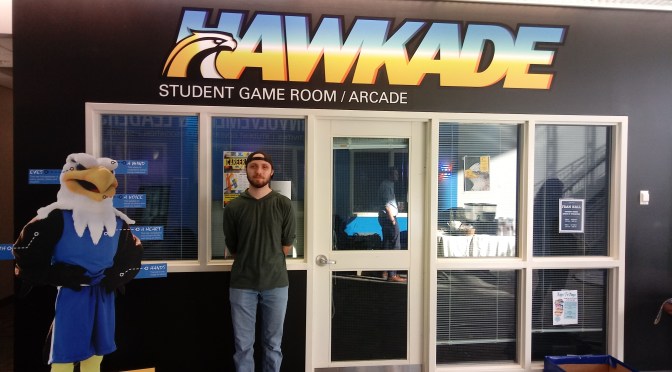
This past summer Franciscan Hall saw some renovations, including the addition of the “Hawkade” e-gaming center. The Hawkade is a not so large room that contains one Xbox One, one Playstation 4, an Xbox 360, and one original Xbox. For just being built, the room seems like a very fun place to hang out and play some games. But perhaps this is just the first step for Hilbert to try and begin an esports scene.

Kyle Rauschelbach, a senior student in the Cybersecurity program at Hilbert,works in the IT department at Hilbert and helped to build the new Hawkade.  Rauschelbach is also a part of the CyberHawks, a club at Hilbert that competes in network defense competitions. The Scribe sat down with Rauschelbach to talk about the new space.

The Scribe: . Do you play video games?

Kyle Rauschelbach: Yes, I’ve played video games since about middle school, if not before that.

TS: Are you interested in esports?

KR: Yeah of course. Esports are something I have watched for a while now. I was very into a game called Smite and I enjoyed watching the pros play that.

TS: Do you believe that the addition of a gaming lounge may point to a future of esports at Hilbert?

KR: Yes, I’ve always thought about that. They have that Hearthstone tournament that is a collegiate tournament. I totally want to get into a collegiate tournament. They have tournaments that are specifically for colleges in a lot of games and I think that would be a cool way to grow Hilbert. If we had an esports team that did well in any game I’m sure it would attract people to come to Hilbert.

The new Hawkade center is a very chill space to hangout and perhaps one day it will be a spot where people can compete for Hilbert in national competitions.

Q&A: Courtney Witherspoon

Courtney Witherspoon has a tough job. As the director of HEOP (Educationally and Economically disadvantaged Students) she has to do everything she can to keep Hilbert students from becoming a statistical College Dropout, a task that is particularly challenging as on-time college completion rates have decrease. The Scribe caught up with her to talk about the major obstacles to getting students through to graduation.

The Scribe: Data shows that graduation rates are lower among low-income students. What particular challenges do they face?

Courtney Witherspoon: I think at this point in time there is a change in the demographic of students that are going to college. If we go back to previous years, college students were mostly of Caucasian origins and middle upper class and that has changed in recent years, colleges are being asked to be accountable for accommodating more students. College in and of itself wasn’t made for minority students historically, so that’s a lot of history to overcome. It is about access to education, how much money it costs, and the support that the student is going to get when they get to college that determines whether that student is going to be able to stay and persist threw to graduate.

TS: What underlining factor or factors are causing low-income minorities to drop out before they get their bachelor’s degrees?

CW: So again I think it is about access to resources and a lot of the time its finances. College is expensive and because we have issues around resources including money often that is a barrier that students cannot overcome. College is expensive and it is only getting more expensive. I mean there are lots of initiative to help students. I am the director of HEOP for (educationally and economically disadvantaged students). It helps but we can’t fund everyone. There is “SAY YES Education” which is for Buffalo Public School graduates and doesn’t fund everyone either. A lot of the time the thing that I hear the most is that the underlining factor, money is the Issue.

TS: According to the National Student Clearing House, about a one third of the students who enroll in college still haven’t earned their bachelor’s degree at the six-year mark. Is that true of Hilbert’s black and Hispanic students?

CW: I think that the Population at Hilbert is a little different. I will give you a contrast. I worked at UB in my previous Job which had a completely different population in terms of it being a selective school. So already you are drawing from students that have had a lot more preparation and were probably more affluent in a lot more respects because they had access to more resources, so they were prepared to do better in school due to that advantage in order to get into UB which is a selective university. Because of that it is sometimes easier to make a distinction between your black and Latino students which are the underserved students as opposed, to an affluent white student. That is why it’s a little easier to tell at a place like UB, I think. Here at Hilbert we have students that live in rural area that don’t have a lot of resources.

Q&A: President Michael Brophy

by Brandon Job

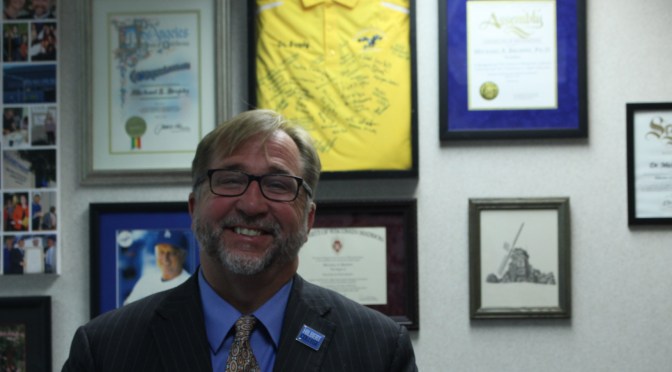
Last Year President Michael Brophy Moved from Los Angeles, CA back home to Western New York to take on a new assignment as the President of Hilbert College. He has been involved in higher education for 35 years, serving as president of Benedictine University and Marymount California University before arriving at Hilbert. He has earned multiple degrees, including a Ph.D in educational leadership and policy analysis from the University of Wisconsin – Madison. The Scribe had a chance to sit down President Brophy to talk about his transition to his new role.

The Scribe: Where are you from and what schools did you go to?

Michael Brophy: My wife and I are both from Western New York. I went to a college very similar to Hilbert called the College of Saint Rose in Albany, New York. I have been in college admissions for 35 years. Half of that was in admissions, so I spent a lot of time in the northeast recruiting students out of high school. And since 2002 I’ve been the CEO of four different institutions.

TS: What specifically drew you to Hilbert College?

MB: Two things: I was ready for my final assignment and I wanted to stay in the Catholic higher education system. And I was really impressed with the board of this institution. And the other thing is I was really looking forward to getting back to Western New York. We’ve been away for 17 years and this was a great opportunity to come back home.

TS: Is there anything you have seen that you would like to change since you’ve been here?

MB: Well, there are really four things. One is our athletics, and we’re going to do that by hiring more full time coaches, by building new fields and by trying to build a new track and field complex and hopefully these things will make a difference. Second is trying to go online with some programs such as law and justice to grow the college and make it more accessible. And we don’t want to be the best kept secret in the south towns. We have to become more aware for people in the area in order to help this college grow a bit. We are also going to try to attract more international students by hiring an international student council.

TS: Is there anything you want the students to know about yourself?

MB: We’ve made a lot of changes to the campus and it’s really all about the students. We moved administrative offices for student life experience and we will keep improving what we do for the students and to keep the good advice and good questions coming

Q&A: Kristina Lantzky

by Rosalie Constable

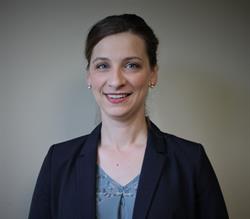
Dr. Kristina Lantzky holds an important position at Hilbert College. Her role as Provost and Vice President of Academic Affairs has given her the opportunity to make a positive and meaningful impact on the staff and students. To prove her love for the job, the Idaho native and proud mother of three drives to work from her home in Rochester everyday. Many students will go through their entire journey at Hilbert College and barely speak to Dr. Lantzy. The Scribe sat down with her to get to know the woman who cares so deeply about what is best for the students and staff of Hilbert College.

The Scribe: What does the Provost and President of Academic Affairs do?

 Dr. Lantzky: My job is to participate in two ways in the institution. So I participate in what’s called a shared government model. That involves faculty senate, staff senate, and senior staff. My role is to work closely with all of those entities and to make sure everybody has a voice and that we are transparent and engaged in looking at the institution holistically from what the needs of the faculty, staff, students, and administrators are. Then the other part of my job where I oversee. So I oversee student retention, the faculty, and the library. I also oversee what’s called the office of institutional research. So that is our data branch of the institution. All of our data is collected there. I also oversee the registrar’s office and online learning. I have a whole host of people who care about the students and work closely with students who we put together to make sure that the academic experience and somewhat the non-academic experience is very positive for our students.

TS: Did you always know that this was the type of work you wanted to do?

 DL:  Well I started at a small liberal arts school much like Hilbert and I was going to be a physician’s assistant or a physical therapist. I started as a biology major. I quickly got into general biology and said ew. Then I became a chemistry major and I got a chance to, when I was an undergraduate, be a tutor for chemistry. I got to work closely with my faculty doing undergraduate research. I loved college and I wanted to be part of the college experience. I loved when I got to substitute teach and all of this great stuff. So my faculty members that I was very close to pushed me to go to grad school. I knew that all I ever wanted to do in this world was teach and I thought that was what I was going to be doing for the rest of my life. I thought I would find a great school and teach and I did for thirteen years. Slowly I moved up the administrative ladder,slowly getting more responsibility. Then I wanted a change and a friend recommended to go and look at Hilbert. They had this provost position, an interim position, and I never thought I’d want to do it but I thought for a year it wouldn’t be bad. It turned out I really loved it. I love working with the faculty, the students, and the staff. So I didn’t always know that I wanted to do this but now that I’m doing it, I can’t imagine having another job.

TS: What would you say is the hardest part of your job?

 DL: I think the hardest part of my job is balancing everyone’s needs. The faculty and staff, both collectively and individually, may have different needs. Sometimes we have to make the hard decisions at the administrative level and it doesn’t make everyone happy. But the number one question we ask ourselves, is it good for our students? And then following it up, is it good for the faculty as a whole? Sometimes those are hard decisions to make but I know that in the end I get to make those decisions and I listen to what everybody tells me. Then we weigh it and we make the best decision we can at that time. It’s hard to know that the decisions we make don’t make everyone happy but the decisions we make, make a stronger and more robust institution.

TS: What would you say is the most rewarding part of your job?

 DL: The students. It is all about them. You know, I’m no longer in the classroom but I have three kids of my own and I can only hope someday when my kids go to college that they’re surrounded by faculty, staff, and administrators who not only care about student’s achievements, but also about their wellbeing. When a first-year student steps onto our campus and when they leave us after four years, the difference in them is amazing. I always tell parents, you will drop your students off and then they will come home for Christmas and you’ll look at them and go, “who is this kid?!” They are so much more mature and grown. Then when you look at them as seniors you think how they are going to go out into the world and be amazing and I got to be a small part of that. Just to watch our students go out into the world and be successful is everything that I need.

Q&A: Kim Buck

by Zach Jezioro

Kim Buck has seen a lot in her three decades as a court stenographer. The Scribe sat down with Buck to talk about what it takes to become a stenographer and some of the craziest things she’s seen in a court room.

TS: How did you get into being a court stenographer?

KB:  I saw it on TV when I was younger and thought it would be a really cool thing to do, that’s what got me interested getting into the position.

TS: What’s the most interesting case you have ever been a part of?

KB: Muzzammil Hassan, who murdered his wife by beheading her. It was noteworthy because it was in the news and people heard about it. I got to learn what his life was about and there were previous incidents that led up to it, it was a high profile case in the area.

TS:  How long have you been a court stenographer?

KB: Since 1990. I was with freelance for 11 years doing deposition work with the state for 18 years, mostly in the criminal part. I am currently training to transition into a supervisor position.

TS: How much time do you need to prepare for an upcoming case?

KB: Hard to say because I never know what’s going to happen.

TS: How long are you usually at a case?

KB: Depends on what is going on. I usually start at 9:30 am, a normal trial is 7 hours. Other days two or three hours, depending on what kind of proceeding it is.

TS: What are some challenges of being a court stenographer?

KB: Keeping control of the courtroom. People get nervous being there, so they start talking fast. Also, it’s not fun reading back in front of a jury.

TS: What is your favorite thing about being a court stenographer?

KB: I never know what’s going to happen. Everyday is a different case and it makes in interesting because you just never know what kind of case you’re going to get.

Q&A with Mamie Smith

Starting Thursday, Oct 3rd, the Hilbert College Community will celebrate St. Francis Week. The purpose of this event is to celebrate the life of St. Francis of Assisi, the school’s patron saint. I spoke with Margaret “Mamie” Smith, Vice President for Mission Integration and Campus Ministry here at Hilbert College about her new role at the college and what it means to be part of a Franciscan institution.

Mamie Smith: St. Francis week is a celebration of our Franciscan spirituality and heritage. Saints are given a particular “feast day” which commemorates them (usually on the day of their death), and this is a day when we remember and celebrate their lives and their example to us. The Feast of St Francis is on October 4.

The Scribe: When does St. Francis Week begin and end?

MS: We will celebrate from Oct 3-10, leading up to the installation of Dr. Brophy on Oct 11th.

TS: How does St. Francis Week fit into the Franciscan heritage?

MS: We have several events which commemorate events from the life of St Francis. On Oct. 3, we walk along with Francis on the Peace Walk at 11:00am. On Monday, Oct 7, we can stuff a wolf to remember the Wolf of Gubbio.

Then we have events that highlight our heritage from the Franciscan Sisters of St. Joseph. This includes Mass on Tuesday, Oct 8 with fellowship and doughnuts afterwards, and tours of the sculptures, art, and heritage of our campus at 11:00am and at 4:00pm on Thursday, October 10.

Finally, we have events which highlight our Franciscan values and community. To celebrate Francis’s care for creation and love of animals we have a pet blessing and mini farmer’s market on October 4 at noon. On Wednesday, October 9 at 11:30am we have a flyover with real hawks.

TS: How does the Hilbert College Community celebrate St. Francis Week?

MS: It’s a great time to learn more about St. Francis and to participate in these celebrations.

The following events will take place during St. Francis Week.

Thursday, October 3:

11:00 a.m. Annual Peace Walk on campus, beginning in Swan Auditorium: Picnic to follow.

3:30 p.m. Employee Service Recognition Awards, Franciscan Hall.

6:30 p.m. Transitus commemoration (prayer and commemoration of the death of St. Francis), St. Francis Park.

Friday, October 4:

11:00 a.m. – 2:00 p.m. Mini Farmer’s Market on the quad.

12:00 p.m.  Blessing of the Animals (quad).

Saturday, October 5:

10:00 a.m. Meghan Memorial Race (first race begins).

Sign up fee $20: sign up on the athletics website.

Monday, October 7:

Blanketing Buffalo: blanket drive for the homeless – collection bins on campus, and table to receive donations in Fran Hall in the morning.

11:30 a.m. start: St. Francis and the Wolf. Stuff your own mini wolf of Gubbio, Fran Hall.

Tuesday, October 8:

11:00 a.m. Mass, followed by fellowship, coffee, and doughnuts in the Chapel of St. Clare.

 Wednesday, October 9:

11:30 a.m. Hawk Creek raptor flight demo and photo op, in front of the dining hall.

Time & Place TBA: Agape Latte.

7:00 p.m. – 9:00 p.m. Dramatic Readings in the Swan, celebrating Hilbert Horizons anniversary.

Thursday, October 10:

11:00 a.m. Heritage Tour with Sr. Sharon: begin at Fran Hall atrium.

12:30 p.m. Scriptural Soundings BYO lunch and bible, Fran Hall Atrium with David Reis.

4:00 p.m. Heritage Tour with Sr. Sharon, begin at Fran Hall Atrium.

5:30 p.m. – 9:00 p.m. Escape Rooms in Fran Hall – bring donation for our food pantry.

Friday, October 11:

2:00 p.m. Installation of Dr. Michael Brophy as 4th President of Hilbert College.

Hilbert Hosts County Executive Candidate Forum

Staff Reports

Hilbert College played host to a candidates forum featuring Erie County Executive Mark Poloncarz and his challenger in this fall’s election Erie County Legislator Lynne Dixon Wednesday night.

The well-attended event, which took place in Swan Auditorium and was organized by the Southtowns Regional Chamber of Commerce, saw the candidates discuss taxes, economic development and the future home of the Buffalo Bills.

Check out WBFO reporter Mike Desmond’s coverage of the forum.

Hawk Radio Prepares for College Radio Day

by Scott Peet

Hawk Radio is celebrating College Radio Day this year with a housewarming party in their new studio location.

Members of the station are inviting students to join in the celebration, which begins this Thursday, October 3rd at 3 p.m. The station will broadcast for twenty-four hours staright.  The station staff will be there to show off the new studio space in the Student Activities Center of Franciscan Hall, and hopes to pack the house with games, events, live performances and prizes through the night.

Program Director Rosalie Constable has taken the lead of organizing this year’s event and shared some of her plans with The Scribe, including a late night video game tournament.

“There’s the new Hawkade,” Constable said. “This will be the first time that we really get to utilize it so I’m excited to see how that works”. The games in this tournament are friendly and open to all, so it might be time to start practicing your skills at Mario Kart, Pac-Man and Centipede.

Ryan Zunner, Hawk Radio’s station manager, will be taking to the stage with his new band “The Midnight Ramblers” for their very first performance.  Their blend of modern music and classic and blues rock will be there to add some energy to the evening at 8 p.m.  Following this live act, there will be an open mic hour where students and staff can show off their talents, musical or otherwise.

The nine-year-old station has seen some ebbs and flows in participation in the past, but this move seems to be sparking interest and awareness of their presence on campus. “Getting more of a visible place where people can see and interact with us I think will be important,” Zunner said.

Hawk Radio is still in its infancy as far as college radio stations are concerned, but this can be a springboard for them to boost their outreach throughout the college and bring in new listeners or team members.

This event is free to attend and all are welcome to use and enjoy the space throughout the evening. There will be a few chances to win prizes including a raffle for a front row parking space. The winner of this spot will have VIP parking privileges for one week outside of Paczesny Hall. Team members will also be selling popcorn during the movies where they will continue with their radio theme featuring “Talk Radio” and “Good Morning Vietnam”.

In previous years, funds raised during College Radio Day were donated to outside organizations,. This year all proceeds will be directly focused on improving Hawk Radio. The station does not receive funding through the Student Government Association and is instead supported through donations and out of pocket expenses paid by Faculty Advisor Don Vincent and staff.

“Raising money for ourselves is really important right now, so we can make the station better for the people involved in the station, and the college as a whole,” Constable said

This housewarming party is part of the 9th annual World College Radio Day meant to promote awareness of this unique platform and the hundreds of stations around the globe that will participate. College radio is an outlet for students to share their creativity with an audience and the medium has a long tradition in providing a place for free thinking and independent content. The new location combined with the event is being viewed as an opportunity for growth and expansion by Zunner.

“To actually have our own dedicated studio room and to really showcase that to the campus is going to be a really fun time,” he said.

For those who cannot attend in person, the broadcast will be available through hawkradio.hilbert.edu.